
Clickbait: What Is It? Is It Harmful To Your Marketing?
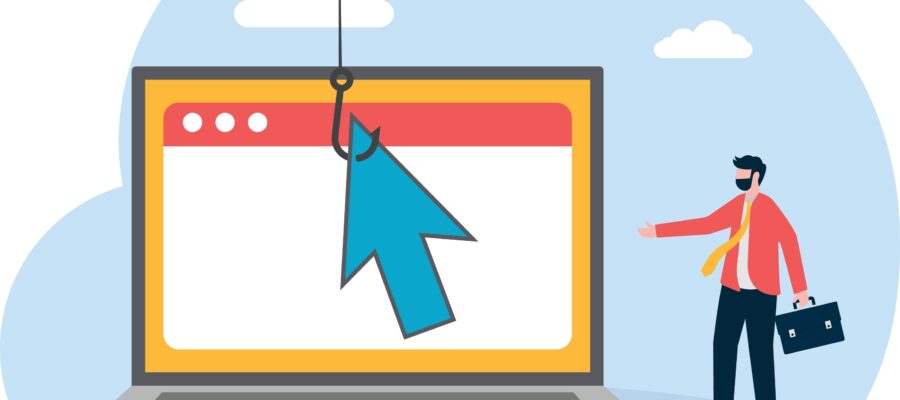
You are scrolling through your social media feed during a quick coffee break. You are not looking for anything specific, just passively consuming content. Suddenly, an image catches your eye — maybe a celebrity you recognize with a shocking expression, or a headline that reads, “You Won’t Believe What This Simple Fruit Does to Your Body.” Your thumb hovers. You know, logically, that the answer is probably mundane. You know it is likely a slideshow with fifty pages of ads. Yet, a tiny itch in the back of your brain demands to be scratched. You have to know. You click.
Welcome to the world of clickbait. We have all been there. As a digital marketing company based here in Dallas, we see this phenomenon every single day. It is the digital equivalent of a carnival barker, shouting promises of amazement to draw you into the tent. But in the world of modern marketing, this tactic is a double-edged sword. Is it a brilliant tool for driving traffic, or is it a reputation killer that will drain your budget and alienate your audience?
Let’s explore the mechanics of clickbait, analyze its psychological grip on users, and determine if there is a place for it in a serious digital strategy. We will look at clickbait examples, dissect the pros and cons, and discuss how to walk the fine line between curiosity and deception.
What Is Clickbait? The Term and the Psychology
At its core, clickbait is content — usually a headline, thumbnail, or link text — designed specifically to attract attention and encourage users to click on a link. The defining characteristic of clickbait is not just that it is catchy; it is that it often relies on sensationalism, exaggeration, or withholding key information to create a “curiosity gap.”
The curiosity gap is a psychological concept where a reader feels a form of cognitive deprivation. When you see a headline like “This One Trick Will Save You Thousands,” your brain identifies a gap between what you know and what you could know. This gap causes a sensation similar to an itch. The only way to relieve that mental discomfort is to click and close the gap.
However, the term clickbait has evolved. Originally, it referred almost exclusively to deceptive content—links that promised one thing but delivered another, or content that was shockingly low quality compared to the sensational headline. Today, the line is blurrier. Is a highly engaging, well-written headline that delivers value considered clickbait just because it uses emotional triggers? Some would say yes; others would call that good marketing.
From Yellow Journalism to Digital Feeds
While the medium has changed, the tactic is centuries old. In the late 19th century, “yellow journalism” was the clickbait of the print world. Newspapers would run screaming headlines with exaggerated stories to outsell competitors. Today, instead of newsboys shouting on street corners, we have clickbait ads and sponsored posts vying for our attention in an infinite scroll.
The stakes, however, are different now. In the era of print, you already bought the paper before you read the article. In the digital age, the “cost” is the user’s click and their time. If the payoff does not match the setup, the user can leave instantly—a metric we track as “bounce rate.” Understanding this dynamic is crucial for any business owner or marketing director looking to protect their brand’s integrity while still fighting for visibility.
Why Clickbait Works | The Benefits
If clickbait were universally hated and ineffective, it would have vanished from the internet years ago. The truth is, it survives because it works—at least, in specific ways. When executed with precision and a degree of ethics, elements of clickbait strategy can be powerful tools in a marketer’s arsenal.
High Click-Through Rates (CTR)
The most obvious benefit is the sheer volume of traffic. Clickbait headlines are engineered to stop the scroll. In a crowded marketplace where users see thousands of messages a day, being the one item that arrests attention is valuable. A higher CTR signals to algorithms (like Facebook’s or Google’s) that your content is engaging, which can, in turn, lower your cost-per-click (CPC) in paid campaigns.
Viral Potential and Shareability
Content that triggers high-arousal emotions — like awe, anger, anxiety, or amusement — is far more likely to be shared. Clickbait taps into these emotions directly. When people feel they have discovered a “secret” or a “shocking truth,” their impulse is often to share that discovery with their network. This can lead to exponential organic reach that standard, dry corporate messaging rarely achieves.
Brand Awareness for the Beginner
For a new digital marketing company or a startup brand struggling to get a foothold, clickbait can be a way to break through the noise. It acts as a wedge, forcing a door open that might otherwise remain shut. Even if the retention rate is lower, the sheer volume of new eyeballs can result in a net positive for brand awareness, provided the content they land on is not a complete disappointment.
The Dangers and Cons of Using Clickbait in Your Marketing
While the traffic spikes can be intoxicating, the hangover from using aggressive clickbait can be severe. This is where we often have to advise clients to tread carefully. The metric of “success” cannot just be clicks; it must be conversion and reputation.
The “Boy Who Cried Wolf” Effect
Trust is the currency of the internet. If you consistently use clickbait headlines that over-promise and under-deliver, your audience will learn to ignore you. This is “banner blindness” on steroids. Once a user associates your brand with deception or wasted time, winning them back is nearly impossible. For a business that relies on long-term client relationships — like a law firm, a medical practice, or a B2B service provider — this erosion of trust is fatal.
High Bounce Rates — and SEO Penalties
Search engines like Google are getting smarter. They do not just measure how many people click your link; they measure how long they stay (dwell time) and if they immediately hit the “back” button (pogo-sticking). If your clickbait drives thousands of visitors who leave within three seconds because the content is thin, Google interprets this as a sign of low quality. Over time, this can tank your organic search rankings, hurting your SEO strategy significantly.
Attracting the Wrong Audience
Clickbait ads often cast the widest net possible. “You Won’t Believe This Trick” attracts everyone, not just your target persona. If you are selling high-end luxury real estate, do you really want traffic from teenagers looking for celebrity gossip? High traffic with low intent leads to poor conversion rates. You end up paying for clicks that never turn into revenue, bloating your customer acquisition costs.
Clickbait Examples | The Good, the Bad and the Ugly
To truly understand how to navigate this landscape, we need to look at specific clickbait examples. These illustrate the spectrum from “engaging marketing” to “manipulative trash.”
Bad and Ugly | Deceptive Clickbait
- Headline: “Famous Actor Dies in Tragic Accident!”
- Reality: The article is about a minor character actor from the 1970s, or worse, it is a speculative piece about a death hoax.
- Why it fails: This is a lie. It generates clicks based on grief and shock. Brands associated with this type of content (often found in the “chumboxes” at the bottom of news sites) are viewed as spammy and low-quality.
- Headline: “Your Bank Does Not Want You To Know This Mortgage Secret.”
- Reality: A generic article about refinancing that every bank offers.
- Why it fails: It creates an adversarial relationship and promises “forbidden knowledge” that turns out to be common knowledge. It insults the reader’s intelligence.
Good and Ethical
- Headline: “We Tried 5 Different Email Marketing Strategies | Here Is The Winner.”
- Reality: A detailed case study comparing strategies with data-backed conclusions.
- Why it works: It uses the curiosity gap (“Which one is the winner?”) but it delivers exactly what it promises. The payoff is valuable information.
- Headline: “The One SEO Mistake That Is Costing You Traffic.”
- Reality: A helpful article identifying a common technical error and how to fix it.
- Why it works: It targets a pain point (losing traffic) and implies a specific solution. As long as the “mistake” is a legitimate one and not something trivial, the reader leaves satisfied.
Using Clickbait the Right Way | An Ethical Balance
So, should you banish clickbait from your strategy entirely? Not necessarily. As a digital marketing company, we believe in nuance. You can use the psychology of clickbait without the deception of clickbait. We call this “Ethical Clickbait.”
Deliver on the Promise
This is the #1 golden rule. If your headline asks a question, the content must answer it — thoroughly and quickly. Do not bury the answer on page 4 of a slideshow. If you promise a “shocking result,” the result better actually be surprising. When the content matches the hype, the user does not feel tricked; they feel entertained.
Use Data and Specificity
Vague clickbait headlines like “You Won’t Believe This” are fading. Instead, use specific, data-driven hooks. “How We Increased Leads by 300% in 30 Days” is a form of clickbait—it teases a massive result to get the click. But it is specific. It sets a clear expectation. If the article breaks down the exact steps taken to achieve that 300% growth, you have earned that click.
Leverage Emotion Responsibly
It is okay to appeal to emotion. Fear of missing out (FOMO), excitement, and curiosity are valid marketing levers. Use clickbait ads to highlight limited-time offers or exclusive content. “Last Chance to Join Our Workshop” is urgent, but honest. “Don’t Make This Costly Mistake” appeals to fear, but if you provide a way to avoid a genuine error, you are being helpful, not manipulative.
Internal Linking Strategy
If you use a catchy hook to bring users in, ensure you have a strategy to keep them there. Suggest relevant internal links within the body text to guide them deeper into your ecosystem. For instance, if you write a catchy post about social media trends, consider linking to our article on Social Media Management to show how we can help execute those trends. This reduces the bounce rate and turns a casual clicker into a potential lead.
Dallas SEO Dogs | Your Source for Marketing Expertise
Clickbait is not inherently evil; it is a tool. Like any tool, it can be used to build or to destroy. When used recklessly, it destroys trust, inflates bounce rates, and damages your brand’s reputation. But when used with skill and ethics, the principles of clickbait — curiosity, emotion, and urgency — can cut through the digital noise and bring your content the attention it deserves.
The key is respect. Respect your audience’s time and intelligence. Write headlines that sparkle, but ensure your content shines even brighter. At Dallas SEO Dogs, we understand that getting the click is only the first step. The real victory is in keeping the user, engaging them, and converting them into a loyal customer.
Whether you are looking to revamp your content strategy, launch a new PPC campaign, or improve your organic rankings, you do not have to navigate these waters alone.
Are you ready to create a marketing strategy that attracts traffic without sacrificing trust? Contact Dallas SEO Dogs today. Let us help you turn those clicks into customers.
FAQ | Clickbait and Marketing
Q. Is clickbait always bad for SEO?
- Not always, but it carries high risks. If clickbait leads to high bounce rates (users leaving immediately) and low dwell time, search engines like Google will lower your rankings. However, if the headline is catchy and the content is high-quality, the increased traffic can actually signal popularity and boost your SEO. The content must deliver on the headline’s promise.
Q. Can clickbait ads hurt my Facebook or Google ad account?
- Yes. Platforms like Facebook and Google have strict policies against “Low Quality or Disruptive Content.” If their algorithms detect that your clickbait ads use deceptive language or link to pages with excessive ads and thin content, they may lower your ad reach, increase your costs, or even ban your ad account entirely.
Q. What is the difference between a hook and clickbait?
- A hook is a compelling opening that draws the reader in, signaling value and relevance. Clickbait typically relies on withholding information or sensationalizing facts to force a click. A good hook respects the reader; bad clickbait manipulates them. Ethical marketing uses strong hooks that transition seamlessly into valuable content.


