
Why AI Needs Humans: The Future of Marketing
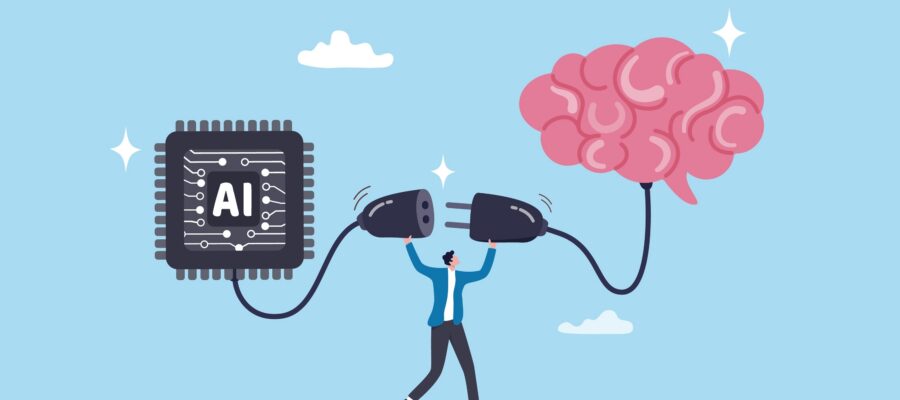
In 2026, the roar of the digital landscape is louder than ever, driven by a relentless engine of automation. Yet, amidst the sea of algorithms, a fundamental truth has emerged: AI Marketing cannot survive on a “set it and forget it” mentality. While machines can process petabytes of data in the blink of an eye, they lack the one thing that truly drives a purchase—the human soul. For a digital marketing company in Dallas, the goal is no longer about choosing between man or machine, but about architecting a perfect symphony where both play their part.
The future of growth lies in a collaborative model where artificial intelligence handles the precision, and humans provide the purpose. As search engines evolve into “answer engines” and social feeds become hyper-personalized, the need for human intuition, empathy, and strategic oversight has never been more critical. Neither entity can achieve peak ROI alone in this day and age; they must work in tandem to navigate the complexities of modern consumer behavior.
How AI is Transforming Marketing Agencies | Efficiency at Scale
The modern digital marketing agency has been fundamentally rebuilt by the integration of agentic systems. In 2026, AI tools and software have moved from being a simple writing assistant to acting as the “connective tissue” of a brand’s entire operations. Instead of teams spending weeks on manual audience segmentation, AI agents now cluster consumer behaviors in real-time, identifying high-intent leads that traditional methods would miss.
- Hyper-Personalization | AI analyzes vast datasets to trigger personalized follow-ups based on real-time intent, ensuring that the right message reaches the right person at the exact moment they are ready to buy.
- Sub-Linear Scaling | Agencies can now handle ten times the content volume—from daily ranking-ready articles to thousands of ad variations—without a proportional increase in costs.
- Predictive Performance | Before a campaign even launches, AI models simulate audience reactions, allowing an AI Marketing Agency to pivot strategies based on forecasted outcomes rather than past post-mortems.
This transformation has freed up human professionals to move away from repetitive tasks and toward high-value activities that require judgment, such as brand narrative and ethical guardrails.
Where AI Falls Short In Marketing | A Matter of Taste
Despite its computational power, AI Marketing is currently facing what experts call the “Sea of Sameness.” Because AI is trained on existing data, it is inherently derivative. It can predict the next likely word, but it cannot invent a new cultural trend or understand the subtle humor of a local Dallas neighborhood. This is where the limitations of AI in Digital Marketing become most apparent.
AI lacks the emotional intelligence to navigate ambiguity or understand the “gut feeling” that often leads to a breakthrough campaign. It cannot empathize with a customer’s pain point or build the deep, authentic trust that modern consumers demand. Furthermore, without human oversight, AI-driven campaigns can quickly drift into ethical gray areas or hallucinate facts, which can cause irreparable damage to a brand’s reputation.
Humans and AI Work Better Together | The Collaborative Loop
The most successful implementation of AI Marketing is a continuous loop of mutual reinforcement. At a leading digital marketing company in Dallas, the workflow is structured to capitalize on the strengths of both parties.
|
The Human Role (Strategy & Soul) |
The AI Role (Scale & Speed) |
|
Defines brand narrative and emotional goals. |
Generates thousands of options and variations. |
|
Interprets cultural nuances and local context. |
Accelerates exploration and production. |
|
Conducts “stress tests” to ensure brand safety. |
Analyzes performance data in real-time. |
|
Makes final strategic pivots and “big calls.” |
Automates repetitive execution and reporting. |
In this 2026 model, humans act as the “directors,” providing the richer context and intentional prompts that AI needs to be effective. For example, a Dallas digital marketing agency might use AI to draft an initial SEO strategy, but it is the human strategist who refines that plan to ensure it aligns with the client’s long-term business objectives and the specific competitive landscape of North Texas. This partnership ensures the personalization feels real, respectful, and true to the brand’s voice.
What AI-Powered Agencies Look Like in the Future | Beyond 2026
As we look toward the next decade, the role of an AI Marketing Agency will shift from a provider of services to an orchestrator of intelligent systems. We are moving toward a world of “Omnichannel Integration,” where separate systems for social media, email, and web design disappear in favor of unified, AI-powered platforms that maintain a consistent conversation context with every individual user 24/7.
The future agency will not just “do” marketing; they will build “loyalty networks.” By 2026, the lines between influencer, affiliate, and customers will be disappearing, and AI will be the tool used to automate community commerce at scale. However, the premium will always remain on “Human creative distinctiveness.” Brands that succeed will be those that use AI to handle the plumbing of marketing while their human teams focus on storytelling that actually drives emotional resonance and growth.
The Symbiotic Future
The narrative of “Humans vs. AI” is a relic of the past. In 2026, the most resilient enterprises are those that have embraced a model of human-AI symbiosis. While AI Marketing provides the precision and speed necessary to compete in a global market, it is the human element that provides the judgment, creativity, and empathy required to win the heart of the consumer.
By offloading the cognitive burden of data analysis to machines, marketing directors can return to the true essence of their craft: building meaningful connections. The future of marketing isn’t a replacement model—it is an augmentation model that empowers humans to be more human than ever before.
Ready to Lead the AI Revolution?
Don’t get lost in the “sea of sameness.” If you’re ready to combine the power of cutting-edge AI Marketing with the strategic soul of a veteran digital marketing company in Dallas, let’s talk. At Dallas SEODogs, we specialize in building intelligent, human-centered campaigns that drive real-world results. Contact us today to schedule your consultation and discover how we can supercharge your brand’s growth in the search results online!
Frequently Asked Questions
Q. Will AI replace human marketing directors in 2026?
No. While AI handles 43% of repetitive tasks and process automation, humans are more essential than ever for strategic reasoning, ethical awareness, and emotional storytelling. AI executes rules at scale, but humans choose the direction.
Q. How does an AI Marketing Agency improve ROI?
By using predictive analytics and real-time optimization, an AI Marketing Agency can identify trends before they peak, swap out low-performing creatives instantly, and scale lead generation by 5-10x without increasing headcounts.
Q. What is the biggest risk of using AI in Digital Marketing?
The primary risk is “efficient mediocrity.” Relying solely on AI without human review can lead to generic content that fails to resonate with audiences, or worse, outputs that contain factual errors or lack brand-safe guardrails.


